
Home / Frets vs. Keys
Frets vs. Keys
Here we'll look at how the range of the guitar fretboard compares to the piano keyboard, and then a little bit about half-steps and the ergonomics of frets and keys.
Below is a representation of an 88-note piano keyboard.
C1 on the left is the lowest C.
C8 on the right is the highest C.

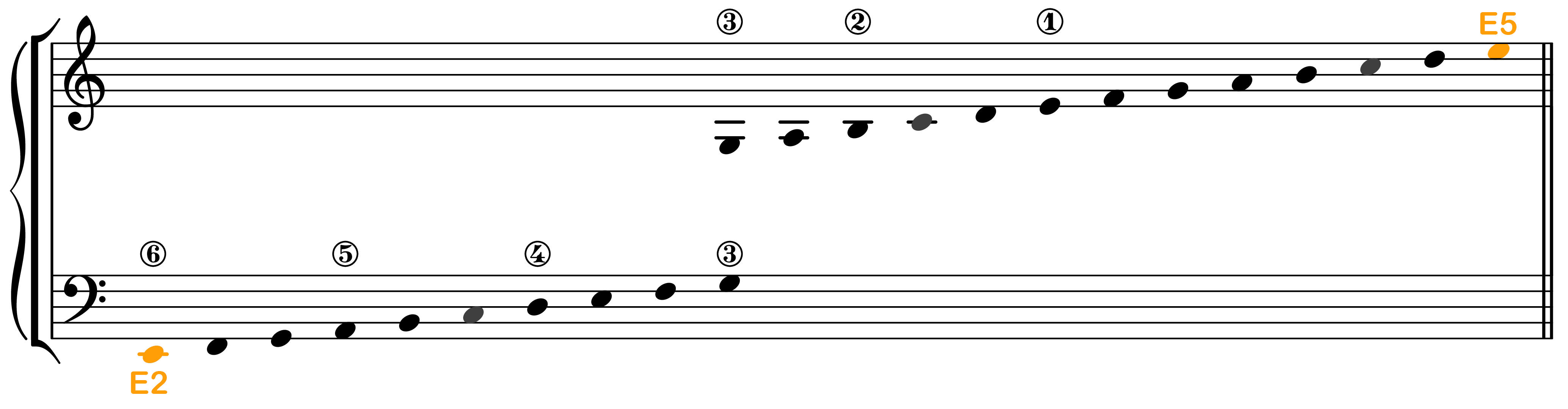
The orange key labeled E2 is the same note & pitch as the
lowest open guitar string — the low E string.
The other orange key labeled E5 is the same note & pitch as the 12th fret on
the highest guitar string — the high E string.

The 13th fret and upwards are a duplicate of frets 1–12, but an octave higher.
Here's how the same range of notes look on the grand staff (the
encircled numbers denote strings 1–6).
Compare these notes on your guitar and a piano to hear this for yourself.
Standard Guitar Music Notation
The guitar sounds one octave lower than the commonly used printed guitar notation.
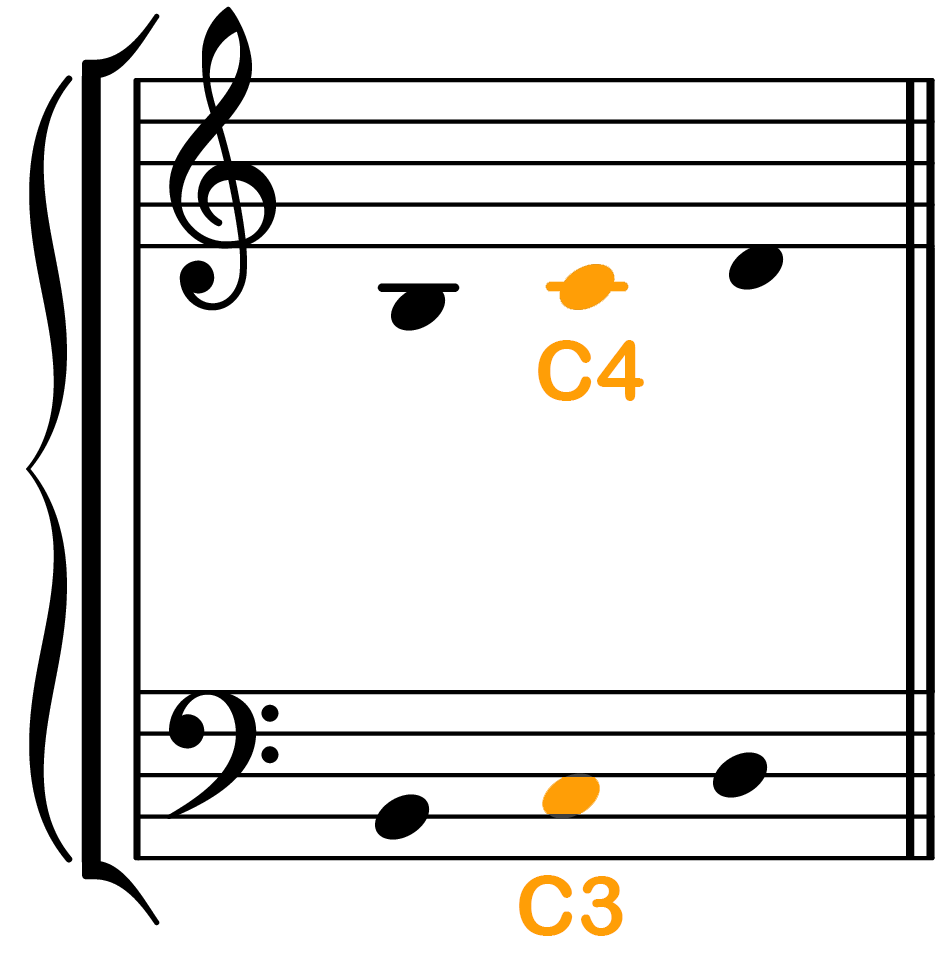
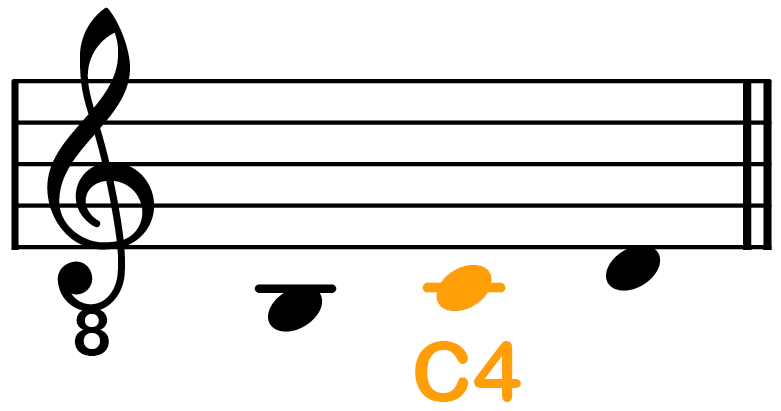
The treble clef to the left has the number 8 attached at the bottom, and it means the notes on this clef will sound one octave lower than the notation printed. So if you read a C4 in music notation, you will actually be playing a C3 on the guitar.
But guitar music is generally notated on a single treble staff. The "8" attached at to the bottom is omitted because the sounding of an octave below the printed notation is assumed.
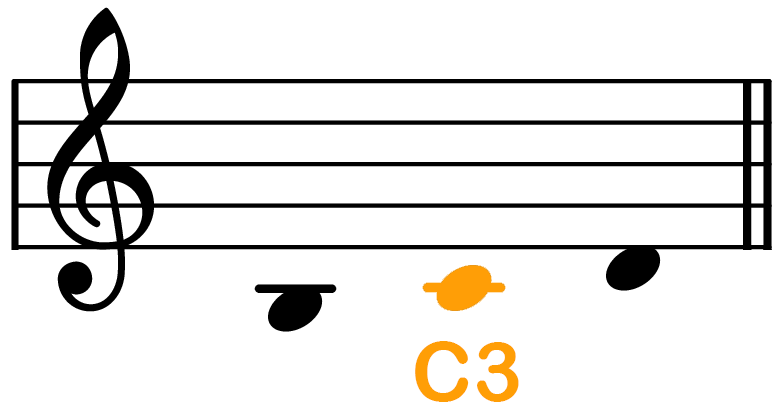
So, even though you're playing a notated C4, the sound that will come out of your guitar will be a C3!